





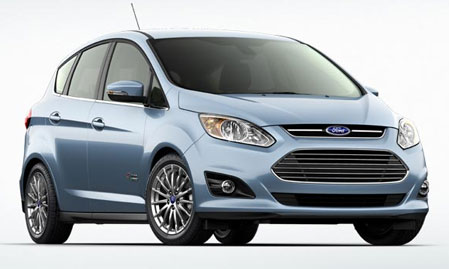
2013 Ford C-Max Energi


We approached our first extended stay with a 2013 Ford C-Max Energi with both immediate interest and long term anticipation. The C-Max Energi is of course based on the C-Max wagon that is sold throughout the world in a number of varieties, but in hybrid form only here in the states. The Energi differs little from the hybrid version, but big things often happen because of little changes.
The primary one, naturally, is that the Energi functions as a fully electric vehicle until you exhaust the high voltage battery, and then it starts exhausting gases from its I4 engine and operating as a full-hybrid, just like the regular C-Max. In order for this to happen there are a few hardware changes, of course; the major one being a larger 7.6kWh lithium-ion battery. And it also gets a larger fuel tank, additional cooling, and changes to the exhaust.
All that adds weight so not surprisingly Government Fuel Economy Ratings are about 9% lower than the C-Max Hybrid at 44-City, 41-Highway, and 43-combined. Those ratings are also 14% less than its sole rival the Prius Plug-In Hybrid.
But, add in a miles-per-gallon equivalent of 100-combined for EV time, and you get a much better Energy Impact Score of just 4.2-barrels of yearly oil use and CO2 emissions of only 1.8-tons. What does all of that mean for you and me?
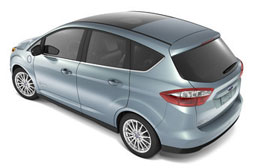 Well, after a 170-mile weekend of the usual errand running including karate classes and baseball practices, one of our staffers netted a great average of 64.5 miles-per-gallon of Regular. Obviously the more time you can spend in EV-mode, the better off you’ll be.
On that, Ford claims an EV range of 21-miles. We didn’t get that many at any one time, mostly due to the very cold weather during our testing, but we did see consistent runs of 15-17 miles. Charge time is 2½-hours on a Level 2, 240-volt charger; up to 7-hours plugged into a standard household outlet.
Compared to the Hybrid, the Energi’s range increases from 570 to 620 miles, while top speed decreases from 115 to 102 miles-per-hour. EV-only speed tops out at 85. The basic front drive powertrain remains the same; a 141-horsepower, 2.0-liter, Atkinson-cycle, I4 mated to an 88kW electric motor, all coupled to a continuously variable transmission.
Compared to the Prius Plug-In, the C-Max has a longer range, and thus a higher MPGe rating. But it also has another advantage; it’s a lot more pleasant to drive, all with a very quiet and solid ride. Still, if you get too aggressive, the C-Max’s tall shape starts to feel a little top heavy.
As for acceleration, the Energi is a clear winner here as well, dashing to 60 in 8.5-seconds, more than 2-seconds faster than a Prius Plug-In. The quarter mile is also faster at 16.7-seconds and 87 miles-per-hour.
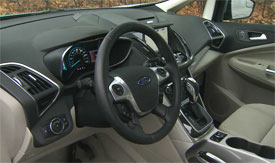 The Energi’s stylish and nicely finished interior gets the nod too, and comes in SEL trim only; which means SYNC with navigation, push-button start and Active Park Assist are all standard. A back-up camera is optional as is Ford’s hand’s free power lift-gate. Storage space does take a hit due to the larger battery mounted in the rear cargo area. Space behind the rear seats falls from 24.5 cubic-ft. to a 19.2, or a bit less than the Prius.
Whether in EV-mode or operating as a full-hybrid, the Energi feels plenty peppy for both city commuting and highway merging, and adequately equipped for both missions. And now it comes down to deciding whether the Energi is a good value, or just a good idea. Well, pricing starts at $33,745. That’s $4,585 over an SEL equipped C-Max Hybrid, and just a bit more than a base Prius plug-in.
So, is it worth it? Certainly, if your commute is under 20-miles and you can function mostly on EV-power alone; but if most of your trips are of the long variety, you’re much better off sticking with the regular C-Max Hybrid.
We applaud Ford for being bold enough to mount a direct challenge to Toyota’s Prius juggernaut, and for giving buyers true options, whether it’s a full EV, Hybrid, or something in between like the 2013 Ford C-Max Energi. That’s one “energy” plan we can all get behind.
Specifications
- Engine: 2.0-liter
- Horsepower: 141
- Torque: 129 lb-ft.
- 0-60 mph: 8.5 seconds
- 1/4 mile: 16.7 seconds @ 87 mph
- EPA: 44 city/ 41 highway
- Energy Impact: 4.2 barrels of oil/yr
- CO2 Emissions: 1.8 tons/yr
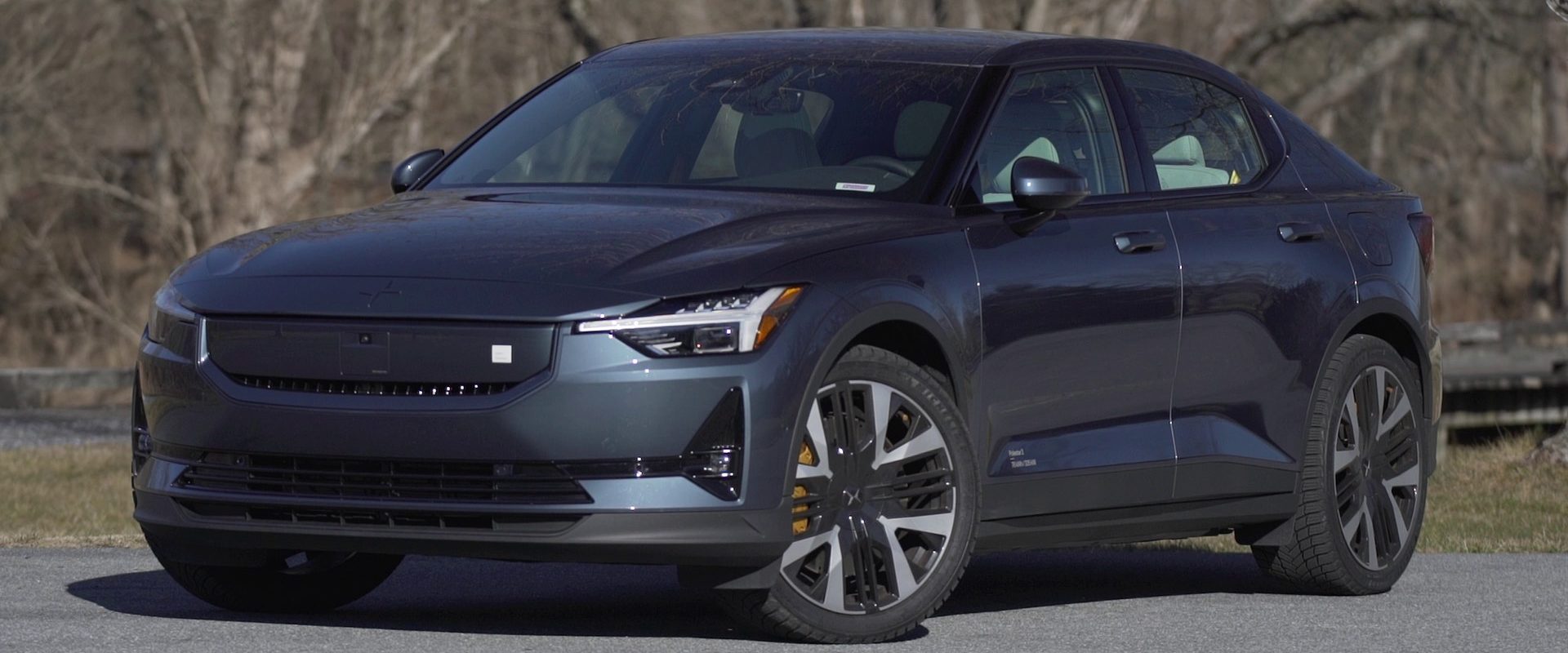
2024 Polestar 2
More Range And More Power For The Polestar 2
Volvo is well on their way to making the transition to an all-electric brand, but their sister-brand Polestar is already there. Now, we’ve spent lots of time in their all-wheel drive, five-door Polestar 2, having tested it in 2021, and a year later when a two-wheel drive version arrived. But, EV updates are coming quickly. So, let us be your guide for all that’s new with the Polestar 2.
While we are driving more EVs than ever, we’ve also been spending a lot of time recently circling back to ones we’ve previously tested. As in this new era of electrified vehicles, significant updates are arriving quickly, with R&D investments increasing and retrofitting them easier than ever. This is often done through software updates that can even be accomplished over the air. For 2024, the Polestar 2 has indeed gotten some software updates, but some physical ones as well.
Clearly aimed directly at Tesla’s Model 3 when it arrived; the Polestar 2’s build quality was vastly better, but range definitely came up short. So, addressing that was priority No. 1; and for ’24 the Polestar can travel up to 20% farther than before while consuming 9% less energy, and when it comes time to charge it back up, it can do that 34% faster too.


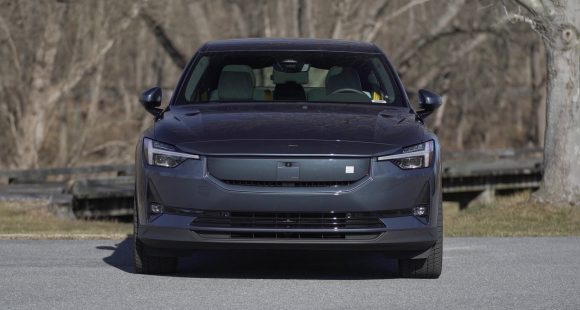
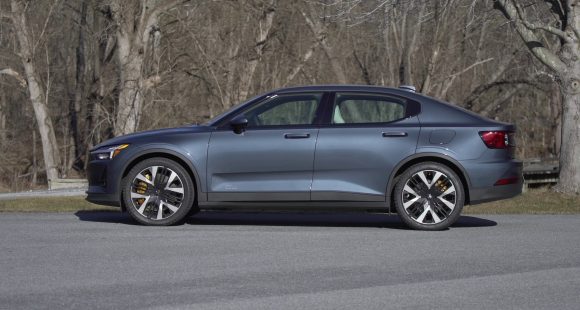
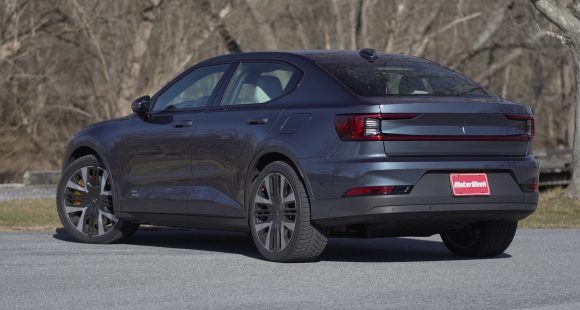
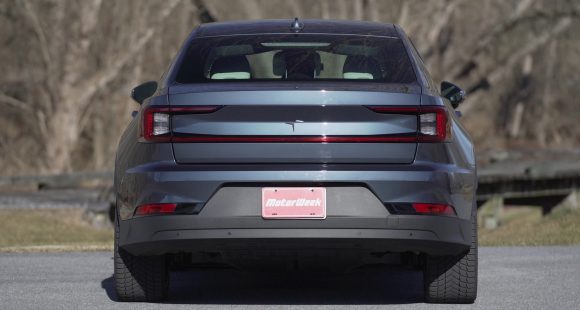
Range in the Single Motor version increases from a max of 270 to 320 miles thanks to a larger 82-kWh battery pack, and that solitary motor now powers the rear wheels, not the front wheels. It’s also bigger, coming in at 220 kW compared to the previous 170 kW front-wheel drive version, going from 231 to 299 horsepower.
Dual Motors keep the same 78-kWh battery, but still sees a boost from 260 to 276 miles and takes advantage of the larger rear motor for a new combined 310-kW output with 421 horsepower. Our test car has the added Performance Pack, which uses an additional 35 kW to deliver 455 horsepower and 546 lb-ft of torque, though max range drops to just 247 miles.
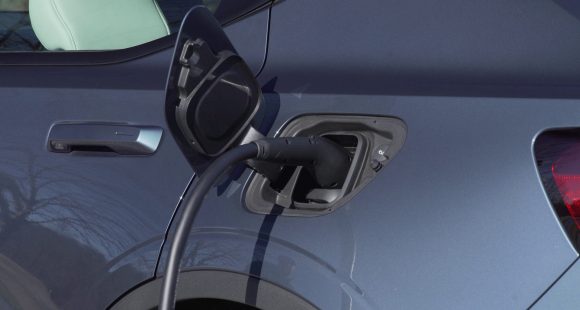
The new battery in rear-drive 2s will also charge faster, now accepting up to 205 kW for an 80% charge in 20 minutes; max for dual-motors stays at 155 kW, which puts an 80% charge at 34 minutes. Using 32 kWh of electricity per 100 miles, the Dual Motor earns a good efficiency rating.
The [Polestar] 2 has always been one of the most enjoyable EVs to drive, even more so now with that additional power coming from the rear motor.
Unfortunately, extremely cold temperatures kept us from seeing that increased range, as we were only on pace for about 194 miles in our test.
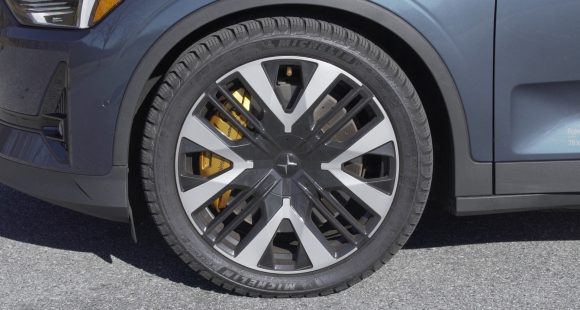
The 2 has always been one of the most enjoyable EVs to drive, even more so now with that additional power coming from the rear motor. And especially when equipped with the Performance Pack as it not only includes more power, but adds 20-inch forged wheels, upgraded brakes, and adjustable Ohlins Dual Flow Valve performance dampers. It greatly improves handling prowess without affecting ride quality, and is easily worth the $5,500 charge if you at all enjoy driving.
Even on a 20-degree track day there was plenty of grip through our handling course. No understeer or oversteer, and lots of feedback through the wheel. There was a nice, strong launch off the line that properly planted us firmly in the seat, and rocketed us to 60 in 4.5 seconds. Power delivery stayed pretty intense up until about 80 mph when there was a definite tapering off. Still, it was a 13.4-second quarter-mile at 102 mph; smooth, quiet, and stable the whole way.
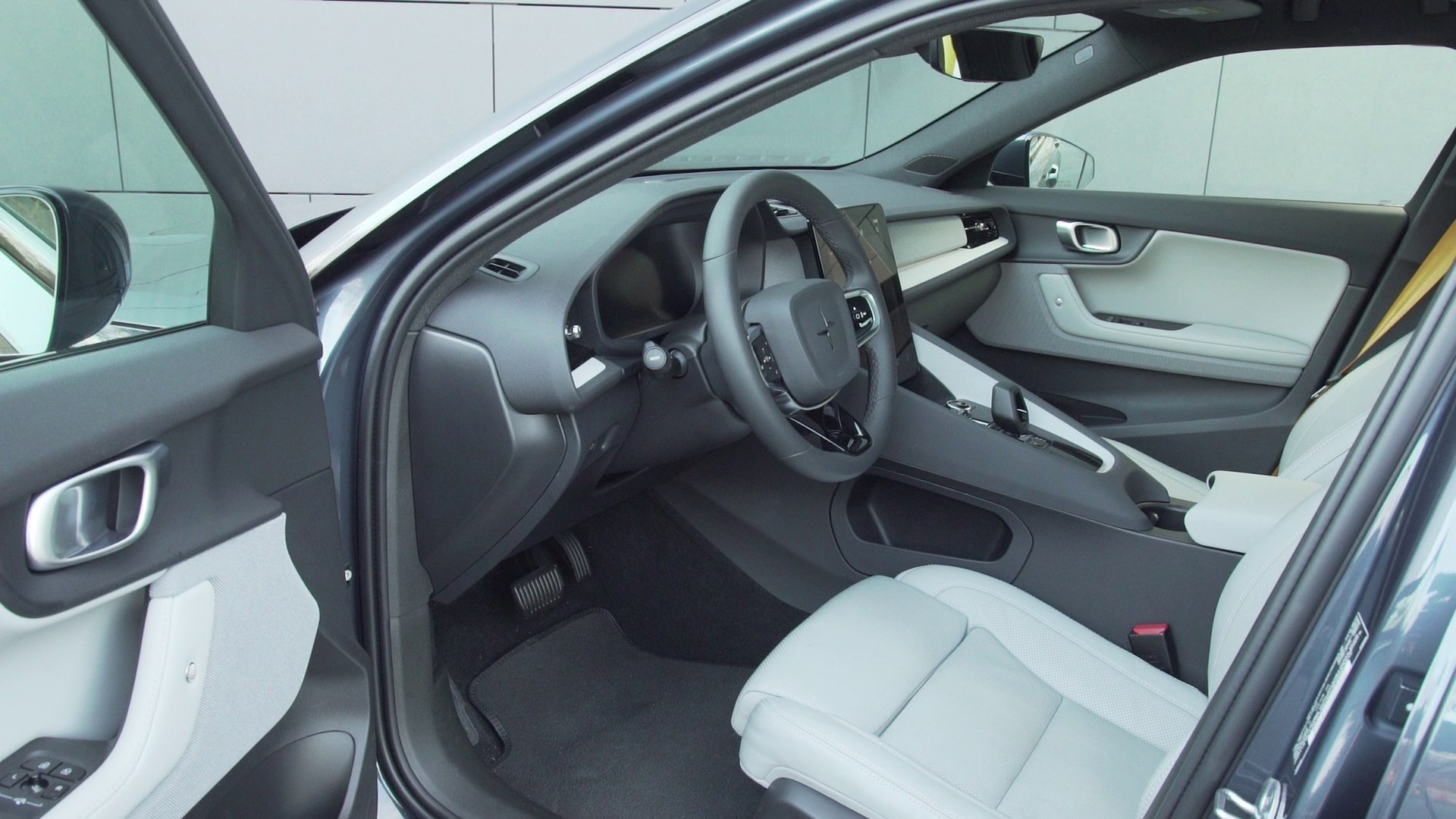


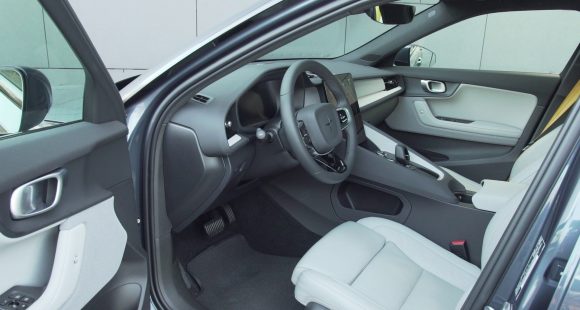
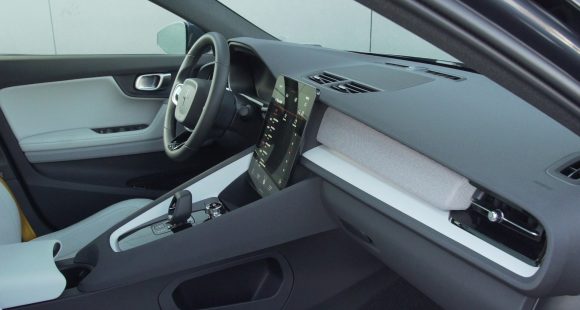
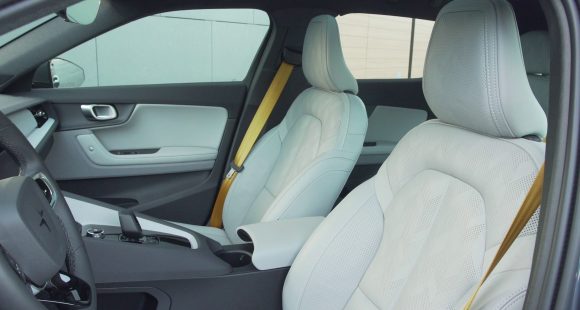
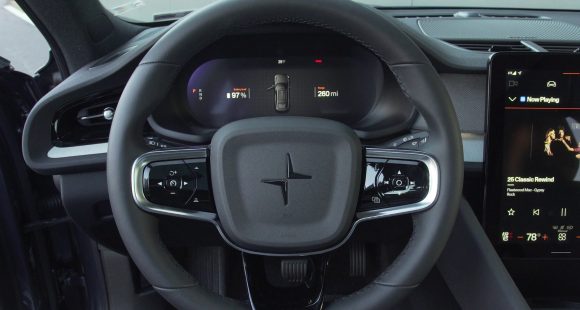
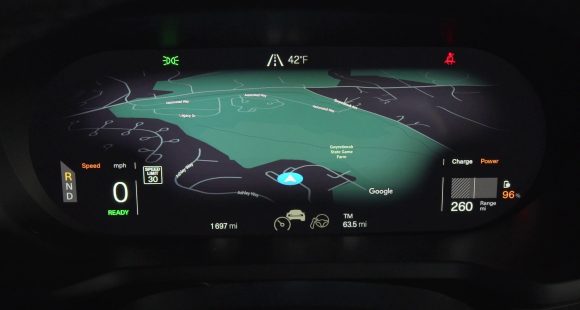
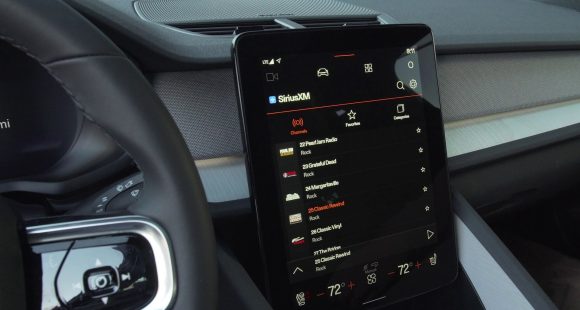
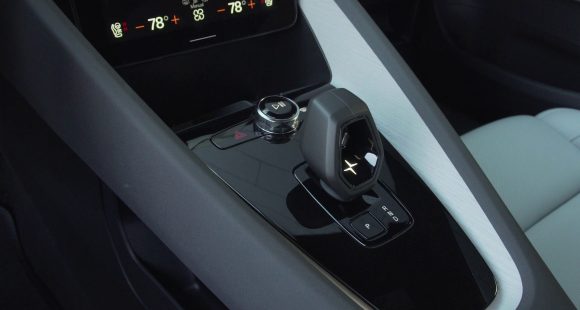
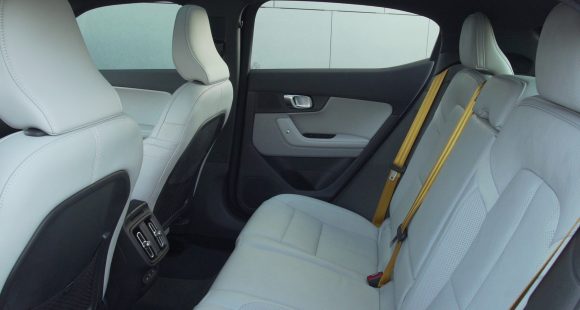
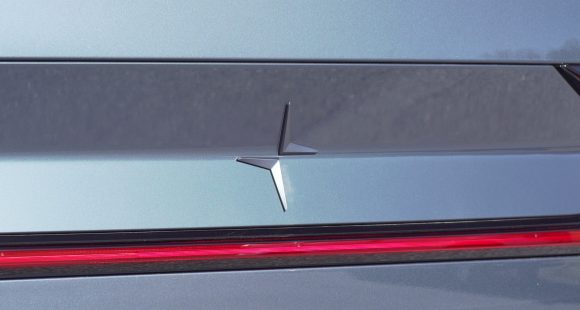
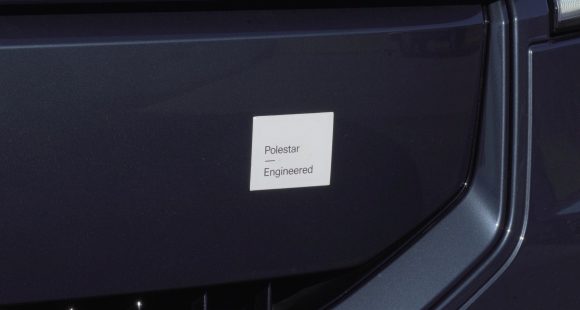
When this car debuted, its Google-based infotainment setup was a novelty, but since then, more and more manufacturers are just “Googling it” so it doesn’t seem out of place at all. The wireless phone charger is easy to access, and there’s a great Harmon/Kardon sound system and panoramic sunroof to enhance the in-cabin experience. Exteriors have also been enhanced with a smooth grille insert and new wheel choices.
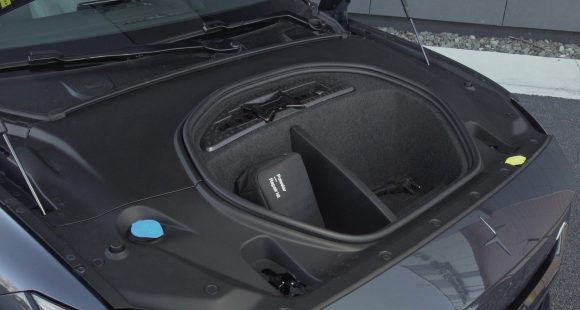
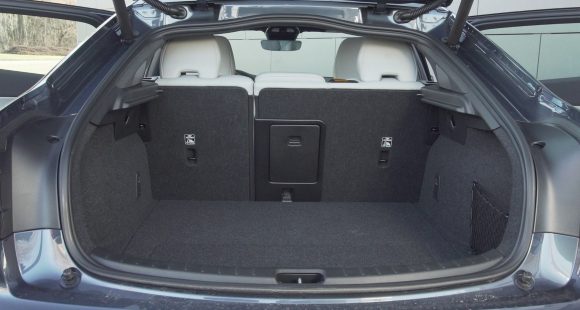
Hatchback practicality means 14.3 cu-ft of easy to access cargo space with split-folding seatbacks for longer items and expanding the space to 38.7 cu-ft. Plus, there’s even a sizeable storage bin up front under the hood.
Single Motor Polestar 2 pricing now starts at $51,300, with Dual Motors starting at $56,700; topping out at $64,400.
For a car manufacturer that hasn’t even been around for a decade yet, Polestar has kept itself busy, totally transforming their latest model in just a few years, making the 2024 Polestar 2 even more appealing. They are certainly off to a good start, and with a host of Polestars just over the horizon, including some all-important utility vehicles, this star will be shining even brighter.
Specifications
As Tested
- Motor Setup: Dual Motor
- Horsepower: 455
- 0-60 mph: 4.5 seconds
- EPA Range: 247 miles
- Efficiency : 32 kWh / 100 miles
- Battery Size: 78-kWh
- Torque: 546 lb-ft
- 1/4 Mile: 13.4 seconds at 102 mph
- MW Test Loop: ~ 194 miles
- Peak Charging Rate: 155 kW